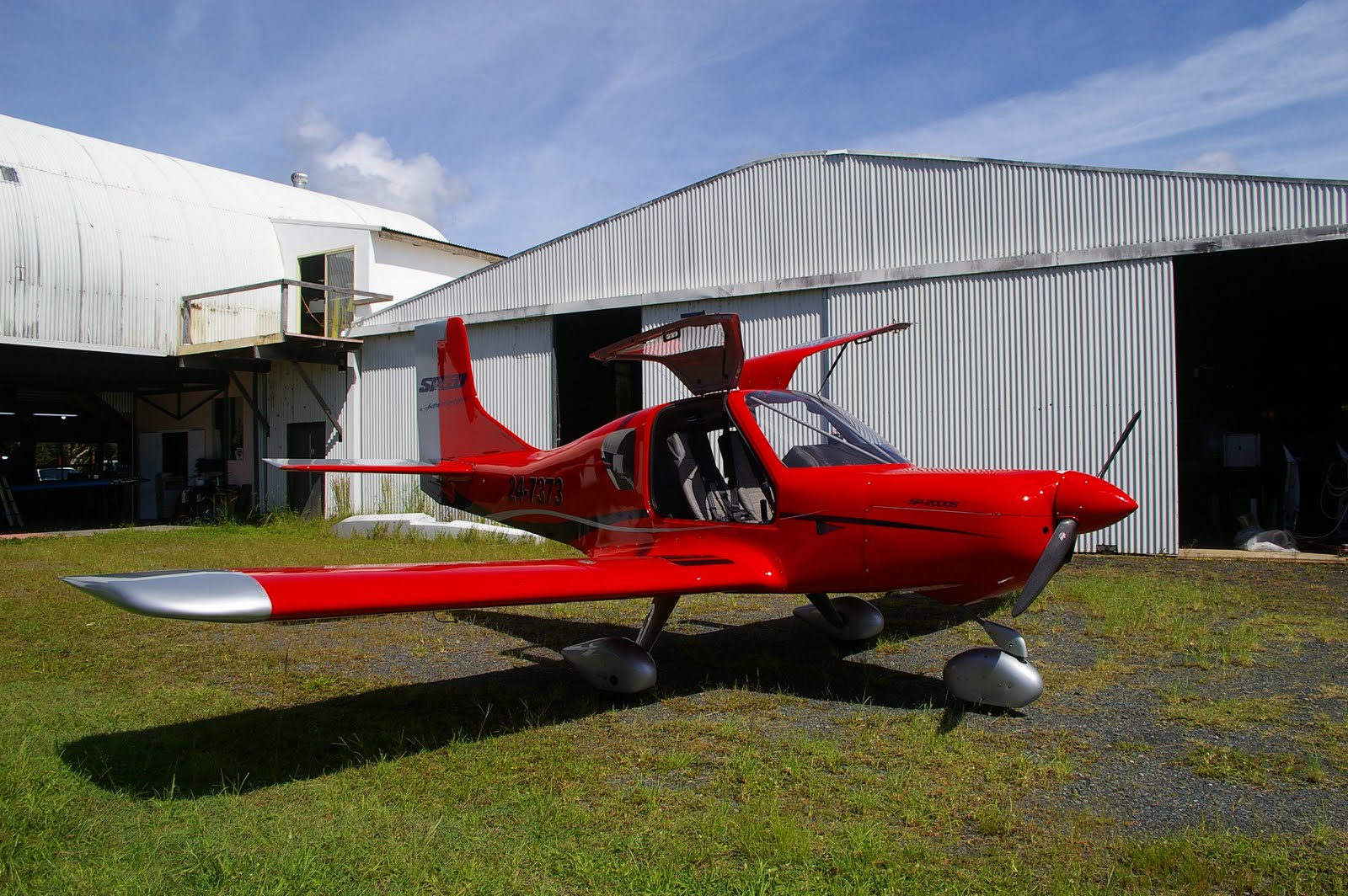
The Australian LightWing SPEED

The Australian LightWing SPEED
2 and 4 Seater Ultralight SPORT Aircraft

Thursday, June 10, 2010

NOR RA-Aus FLYIN 2010 @ Monto, QLD


Hello Dear Readers,

I would like to extend an invitation to you to visit and view the Australian LightWing Aircraft and team at the Monto Fly In, this Queens Birthday long weekend.

The North Burnett Regional Council welcomes aviators and friends to the inaugural RA-AUS Northern Region FLY-IN and extends a warm friendship for an enjoyable, relaxing and safe stay.

The Fly-In has a full schedule of events, entertainment and aircraft, so come along and check it out and say hello.

Useful Links:

http://www.raa.asn.au/monto.html

http://www.lightwing.com.au

Thursday, May 6, 2010

Recreational Aviation Pioneer 2010


On Saturday, the 3rd of April 2010, the Ra-Aus (Recreational Aviation of Australia) awarded Howard Hughes of 'Hughes Group of Companies' in Ballina, the recognition of achievement as a “Recreational Aviation Pioneer 2010”. He was acknowledged for over twenty-five years contributing to the Australian Aviation Industry. The award was presented at the National RA-Aus Temora Airshow in southern NSW.

Howard (Howie) Hughes and his team have been manufacturing the Australian LightWing two and four seat aircraft range for twenty-five years. After beginning in a colourful career based in architecture, he then included boat building, hang gliding, building trawlers in Ballina in the 80's, and more recently:- electric green cars, catamarans, computer software and back to architecture into his repertoire of interests and passions. Howard has been involved, inspirational and eccentric and always focused on sharing his passions with fellow enthusiasts and local and international schools and university aeronautical programs.

The Hughes Group of Companies is a family owned and operated group, with supporting staff who are just as involved and dedicated to their projects. Nick Hughes, Howard's son, is your 'aircraft dictionary' on aircraft repair, parts and service. Shelly Hughes, Howard's daughter, creates all things digital for the company's products, with a background in music recording.

We would like thank the Ra-Aus for the acknowledgement of Howard's achievements and accomplishments, and would like to raise a toast to the next twenty five years in Australia's thriving aviation community.

Thank you!

Monday, May 3, 2010

A Lesson in Airmanship


On the return trip from Temora to Ballina after the RA-Aus Annual Fly-Inn, a rather serious lesson in situational awareness (SA) to ues the gurrent uzz words !! and/or airmanship was learnt on the last leg, from Armidale to Ballina

Thanks RA-Aus for the ‘Recreational Aviation Pioneer Award’ and thanks also to Rod Birril for the nomination, I had a great time on the stage accepting the award and talking about long ago disasters like the time the Jabiru hit the horse at Holbrook back in... err 199somthing.

On taking off out of Armidale on a rather sunny Sunday afternoon, about 15 minutes into the trip I could smell something a little different in the cockpit.

Not a strong smell, certainly not a burning smell, but, a smell nevertheless. I looked around for bushfires below me and any other sources of the smell.
However, as the trip continued and as I was heading direct: Armidale – Ballina, over some pretty nasty terrain, I decided to veer towards Coffs Harbour where there were green hills and paddocks in which to make an emergency landing. Thereby obeying Mr Rotax's rule of never operating his engine over an area where the aircraft can not be landed safely below. A little further into the trip and with the coast more or less in view, the smell turned into small droplets of oil on the windshield, which clearly explained where the smell was coming from: I had an oil leak.

During the next 20 minutes, the problem exacerbated into more oil and a strong smell indicating the leak was increasing in its volume and with Coffs Harbour coming into view I felt a lot easier. I sent out an emergency call to the Coffs Tower and happily managed to glide in and make a safe landing with the oil pressure holding.

After a few scotches that evening and a comfortable stay in a Coffs motel, Nick and I discovered the source of the oil leak was a minute crack or hole in the oil filter located under the hose clamp which we used to secure the oil filter.
And after cleaning the oil which had by that time leaked all over the aircraft, replacing the oil and cleaner, I continued the journey home after thanking the Coffs Harbour Controlers.

*A word of warning to pilots flying into the Coffs Harbour. The turbulence over the trees along the north/south runway is quite savage, particularly when you’re already got the jitters and you can’t see the runway very clearly through the oil slick.

The oil filter was brand new, as was the engine, which at that stage had only done about 20 hour flying. So, the source of the hole that was right next to a dint in the oil filter, indicated that it had been with the engine since it left the Rotax factory.
This dint is difficult to explain, as ‘Bert Floods’ //Wall insists that all oil filters are tightened only by hand, whereas this one looked like it had been tightened using an oil filter spanner, which consists of a small piece of steel and a loop of strong fabric used in conjunction with a spanner. It looked like this had then dinted the filter body to the point that it had ruptured. However, what caused the dint and subsequent hole must remain unknown.


Lessons to be learnt from this exercise to me were; Never ignore a strange smell in the cockpit, no matter what it is- if it’s unusual- Turn back to where you came from, if possible, and find out what’s causing it.
If I had of done this and returned to Armidale then any risks I had taken would have been negated.

Lesson Number 2
Always obey the rules clearly specified by the engine manufacturer, that is – never ever fly over an area where you can’t make a safe landing beneath the aircraft within an adequate gliding distance.

Lesson number 3
Even though we are not supposed to fly into control zones, in doing so in an emergency, the Coffs Tower afforded us every courtesy and assistance even offering a fire truck if I needed it.

Lesson number 4 SA !
Had I taken the direct route from Armidale to Ballina, there is no doubt that I would have lost my aircraft and possibly my life in the valleys and canyons of the Great Dividing Range. Situational awareness played a big part here, I had not sat down and planned the deviation as CASA say to do in their DVD, it was simply a very very obvious thing to do. But go on... call it SA !


Thanks for reading. Have a great day,

Howie Hughes.

Thursday, April 29, 2010

Controlled Airspace in Australia

24/09/09


The following is communications between myself and Mr McCormick CASA CEO regarding the issue of CTA (Controlled airspace) endorsement for RAAus pilots.

I believe this should apply conditionally, I point out that I am not totally familiar with all the issues involved.

I am in favor of this for a number of reasons but Mr McCormic is not in favor at this time. His reasons are safety related and no doubt influenced by recent mid-air collisions both here and in the USA so I assume his theory is less aircraft flying = less possible collisions which explains his maximum of 6 aircraft in the circuit rule.

BUT also…….. he says that since announcing the decision to put the RAAus CTA on hold, he had two to one correspondence (20 to 10) supporting his negative decision so please, if you agree with me that it's a good idea to gain a CTA approval, send an email in support to john.mccormick@casa.gov.au
I believe its hard to argue against RAAus pilots increasing their skill levels if they want to ??
Mr McCormicks reply was short and too the point, he took the time to attend RAAus meetings in Sept 09 so he is obviously interested in our organization but his negative decision to put off the RAAus CTA, is regrettable in my opinion. I do not write this on behalf of anyone but myself.

ALSO, there are probably some political overtones in the whole CTA argument where CASA is under pressure to keep things safe and therfore conservative, so a letter or email to your local PM would not go astray, saying that ....."hay, there are 10,000 of us RAAus members now, we have come a long way, there are now more RAAus schools than GA schools and more RAAus pilots than GA, only a few will want or even ever use CTA but just like lesser skill road users are allowed to use community facilities like ROADS !! why shouldnt we use our tax payer funded airfields provided, the laws are revised, RAAus training is put in place, we have the necessary skills, aircraft, medical requirements are met and we do not compromise the safety of others.


The Letters.

1st letter =


Dear Mr McCormick

Firstly, I agree that we did not expect to fly in CTA back in the 1970's but we where not allowed to fly over roads then either. If RAAus members remained restricted to flying 1 seat aircraft powered by lawn mower engines then we would not have close to 10,000 members today. When we began manufacturing aircraft in Ballina in 1984, we where not allowed to operate at the Ballina airfield, as a result of this, the then AUF organized for skill levels to increase, Radio, regulatory skills, flight skills etc and we where then permitted to use this airport then an MBZ, now a CTAFR, we do so alongside RPT's. With a further increase in skill levels, the transition to CTA use, as I see it is the same again. I fail to see the logic of a safety authority arguing against the increase in skill levels of RAAus members as would be required for a CTA endorsement.


Second: History shows there will always be critics of increases in RAAus aircraft quality and use but I hope this would have little influence on your decision making as I am not suggesting you make a CTA endorsement compulsory.
Third: There are 3 CTA's in Australia where approvals have been given to flying schools to permit RAAus members and aircraft to operate in their CTA's, (nowhere else) I do not believe that the safety record of these CTA's has been compromised as a result of this.
Regards
Howard Hughes
CEO LightWing.


2nd letter=
Dear Mr McCormick

From your initial response, it is my opinion that your concern about RAAus pilots entering CTA is unfounded.
This opinion is based on the existing issue of these endorsements to date and my past experience in this area.
If a broard RAAus CTA option was introduced I believe that, based on the schools in Tasmania and NSW that have been issuing RAAus CTA endorsements for some time, there would be no more than a few hundred additional issued per year and as in the past, they would be issued to the highest standards.
Note : RAAus CTA manual produced by Ex CASA staff Steve Tizzard.
part of the group that will line up for the endorsement will be the ones that will purchase high end aircraft such as mine (this is based on actual potential orders) and as such, putting off this introduction at a time of extreme economic pain is unfortunate.
Others that would seek a CTA will do this as a step towards a PPL, others will do this to simply increase their level of skill, there will me many and varied reasons, as there has been no downside in the past, I believe that there will be none in the future.
In Tasmania, the RAAus CTA applies to Class D airspace.
I urge you to give this matter additional consideration, jobs here depend on it.
Regards
Howard Hughes


Please feel free to comment.

Thursday, March 26, 2009

'The Roadie' Blog Page


Hughes Group of Companies had a team (2009 / 2010 of three French Work Experience Students, Dorian Martinez, Nael Montouchet and Eric Turion, visiting from ISAE (Institut Superieur de l’Aeronautique et de l’Espace).

Their visit here will be focused mainly on the design and manufacture of 'The Roadie',
an electric powered car, with a difference.

Follow their progress and express your ideas and interest on the Roadie's Blog Page:

Friday, February 27, 2009

Factory Tour

Enjoy a walk through of our Factory!
Highlighting the features of the SPEED and where the Australian LightWing is constructed.

Monday, February 2, 2009

Any Time Now.

I received a call from Wall at Bert Floods, (Bert Flood Imports sell and support the Rotax range of aircraft engines and have done so since we began manufacturing back in 1985, Bert passed away last friday after a long illness, this is sad news, Bert was a pioneer in light sport aviation and his crackly voice and cheeky grin will be missed, he has (as we have) established a sound family based business that should carry on, we wish his family all the best through this sad time.

We are all v'excited to be in the early stages of negotiations with a prospective agent for our aircraft in S-Africa, watch this space !!

Climate change, love it or hate it, believe it or distrust it, it isn't going to go away any time soon and I believe that if you/me/us// all dont become a part of the green revolution, we will be consumed by it, you can quote me on that.
I have personally read a few books (Hot Flat and Crowded" being the most recent) and visited a few cities where the air is so bad that you could cut it up into chunks and sell it as sludge !! so I have come to the conclusion that its time we did something about it. If we don't, we are simply taking too big a risk with our future.
Watch this space for the evolution of the Roadie 2 seat 3 wheel electric car design, to see a similar motor vehicle, go to www.aptera.com to see what they are doing in the USA in this area or T-Rex in Canada or Aero-3S in Qubeck.
Agreed, the contribution I or my company can make is minuscule compared to China's (even slower) industrial expansion but then, if we all used that as an excuse for inaction, the problem will only continue to get worse. Just like a turbine blade only gives the air inside the engine a little wak, many blades and many little waks add up to 20,000 hp coming out the engines tail pipe, hell, this is a real bad analogy, one trip in a 747 to Europe, consumes 1 cubic kilometer of ther earths atmosphere, consumes it, converts it to 500 tons of carbon and dumps it in the upper atmosphere........... oh well !

So my contribution..................The LightWing range use what is called a "cradle to cradle" recycling philosophy, that is to say that when the aircraft is all used up, it can enjoy the maximum in recycling, the steel fuselage is 100% recyclable while the fiberglass shell (less than 20 kg total) is the only item that can not be easily recycled, aluminum wings can be totally recycled.
This means that about 80% of the airframe can be recycled compared to only 10% of an all composite airframe.

Our Variable pitch prop further adds to in-flight efficiency in all our aircraft particularly the low wein SP-200, by maximizing the thrust vrs. speed of the aircraft, a fixed pitch prop wall always be a copmromise, with our VIP prop, you throttle back to lets say 4,900 engine RPM (Rotax) and bring the fuel consumption back to less than 15 l per hour, this means less CO2 emission and a better environmental outcome while you can still cruise at over 100 kts. I dont know exaclty how this equates to gms of CO2 per kilometer but I have a feeling I soon will, CO2 output will become more and more important in the future.

Now I dont want the readed to think that LightWing habitually goes about biting off more than we can chew BUT........... we are building a lightweight motor vehicle.
I believe that time spent on this project will have usefull spinoffs in our aviation persuits.

For example, the body shell of the 3 wheel all electric Roadie will find an application as a body for a rear engine pusher aircraft and the Roadie will have the option of throwing a couple of pins, un-coupling the power train and fitting wings for the ultimate fly away car or for that matter, floats for a high speed boat or amphib aircraft, is that a flexible environmentally friendly approach or what ? The same 2 seat body is able to fulfill a number of rolls so no need for 3 different vehicles AND in all rolls, the common body is super light weight and therfore energy efficient.

Some history.............
I see a number of similarities in the way the aircraft industry was twenty-three years ago, and how the automotive industry is today.

Twenty-three years ago there were rules in place that prohibited light aircraft from flying above 500ft altitude and prohibited flying over or crossing public roads (remember this was ten years after we landed on the moon). The sport aircraft industry, that back then was a joke, employed no more than 2 or 3 staff, now employs hundreds and the industry exports more than it imports.
The same applies to the car industry today.

There are rules that limit innovative automobile design to home builders that are currently converting small cars to battery power at the lower end and at the other extreme, major manufacturers do not seem to be doing anything that makes them eligible for the billions promised under this new green scheme.

Twenty-three years ago most Civil Aviation staff were against the light aircraft industry and did everything they could to stop it. Those people are gone now, replaced by and industry that is both safer and largely self-regulated.

I believe innovation will come mostly from grass roots companies and this is where the majority of the funding should be applied. The larger companies will continue to manufacture larger vehicles but I believe, particularly in the USA and Australia, they will go the way that aircraft manufacturers have gone- they will not change. If they wanted to go green, they would have started, as they have in Europe, long before now.

What happened over the past fifty years in aviation is exactly the same as has happened in the auto industry. When an accident occurred, a new rule was made in an effort to prevent the same accident occurring again. This made the rule book grow and it also made the aircraft heavier and more complex to the point that almost no one was prepared to make aircraft anymore. Innovation had been killed! Efficiency has also been a casuatly. My new generation sports aircraft weighs 300 kg and can easily carry its own weight. Thats one to one in efficiency. A 1.5 tonne motor vechicle is lucky to have 1/10th of this carrying capacity.

What brought about the revolution in design and certification of aircraft CAN and MUST be applied to motor vehicles.
Any Time Now.